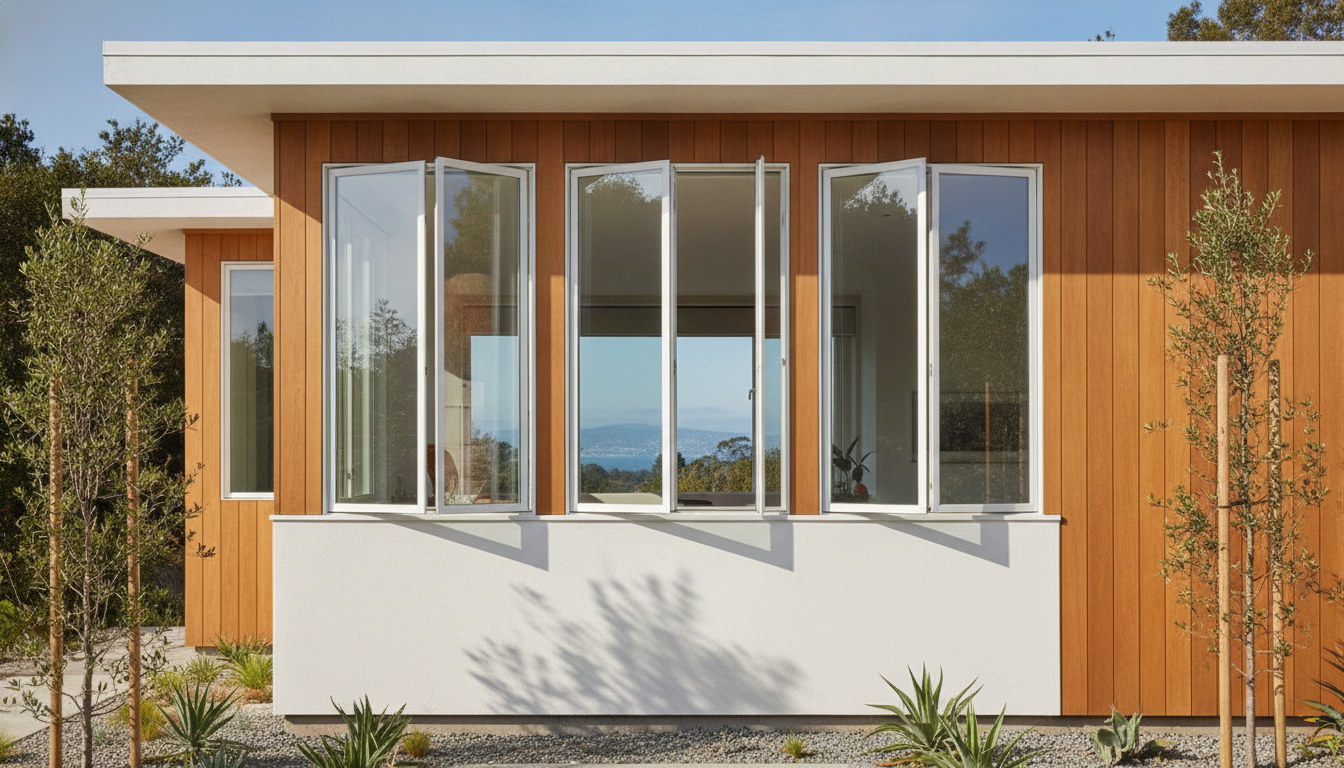

Signs Your Bay Area Home Needs New Windows (And What It Costs)
Your windows are doing more work than most homeowners realize: insulating against Bay Area temperature swings, blocking street noise, keeping energy costs down, and protecting interior finishes from UV damage. When they start to fail, the consequences show up gradually, which is why so many Silicon Valley homeowners keep delaying a replacement they should have made years ago.
Here is how to know when it is time, what Bay Area window replacement costs in 2026, and what to look for when choosing a contractor.
What Are the Most Common Signs That Bay Area Windows Need Replacement?
The signs fall into two categories: performance failures you feel, and structural failures you see. Both matter.
Signs you feel:
- Drafts near closed windows are the clearest indicator that your window seals or frames have failed. In Santa Clara and San Jose homes, this often shows up first on windows facing the prevailing coastal wind.
- Higher energy bills without a clear cause. Windows account for 25 to 30 percent of residential heating and cooling energy use, according to the U.S. Department of Energy. When they start leaking conditioned air, your HVAC system compensates, and your utility bill reflects it.
- Rooms that are always hotter or colder than the rest of the house. Single-pane windows and failed double-pane units can turn a south-facing room into an oven in summer and a cold spot in winter.
- Condensation between the panes of a double-pane window. This means the sealed insulating unit (IGU) has failed. Once moisture gets between the panes, the insulating gas has escaped and the window’s thermal performance has dropped significantly.
- Difficulty opening, closing, or locking windows. Warped frames, worn hardware, and swollen wood sashes are not just inconvenient. They are also a security issue.
Signs you see:
- Visible rot, decay, or soft spots in wood window frames
- Cracked, chipped, or broken glass
- Peeling paint or water staining on the interior sill
- Visible daylight around the frame edge when the window is closed
- Rust or corrosion on aluminum frames
If you are seeing two or more of these on the same window, replacement is almost always more cost-effective than repair. The math changes when a single window fails in isolation, but most Bay Area homes that have reached replacement age are dealing with multiple windows across the house.
How Much Does Window Replacement Cost in the Bay Area?
Window replacement costs in San Jose, Santa Clara, and surrounding Silicon Valley communities vary based on window size, material, glass type, and labor complexity. Here is a realistic breakdown for 2026.
Per-window cost (installed):
- Standard double-hung or single-hung window (vinyl or fiberglass): $400 to $900 per window
- Casement or awning window: $500 to $1,100 per window
- Bay or bow window: $1,500 to $3,500 per unit
- Skylight (Velux): $900 to $2,500 installed depending on size and shaft requirements
- Sliding patio door with integrated window panels: $1,200 to $3,000
Whole-house replacements for a typical Bay Area home (10 to 20 windows) run between $8,000 and $20,000, including labor and disposal of old windows. Homes in Palo Alto, Los Altos, and Atherton with custom window configurations typically fall at the higher end.
What drives cost up:
- Stucco exteriors require cut-and-patch work around the window opening, adding $100 to $300 per window in labor
- Second-story or difficult-access windows add staging or equipment costs
- Custom sizes outside of standard rough openings require special-order units with longer lead times
- Historic or HOA-governed neighborhoods may require specific frame colors, materials, or profiles
What drives cost down:
- Replacing the same size: if your new windows fit the existing rough opening without modification, labor costs drop significantly
- Vinyl frames: durable, low-maintenance, and substantially less expensive than wood or clad-wood
- Multiple windows in the same project: most contractors, including First Tier Exterior, price full-house replacements at a lower per-unit cost than single-window jobs
What Types of Replacement Windows Work Best for Bay Area Homes?
The Bay Area’s climate is one of the most favorable for windows in the United States, but “mild” does not mean “identical.” There is meaningful variation between coastal foggy zones (San Francisco, Daly City, Pacifica), inland warm zones (San Jose, Fremont, Concord), and peninsula microclimates.
Frame material:
- Vinyl is the most popular choice for Bay Area replacement windows. It does not rot, does not need painting, handles the coastal moisture well, and costs significantly less than wood or aluminum. Anlin windows, which First Tier Exterior installs as a certified Anlin dealer, are a strong vinyl option with high energy ratings and strong warranties.
- Fiberglass is more dimensionally stable than vinyl in extreme temperature swings, which is less of a factor in Santa Clara’s mild climate, but relevant for homes in hotter inland areas. It costs more than vinyl.
- Wood is beautiful and preferred in architecturally historic neighborhoods, but it requires ongoing maintenance, is vulnerable to moisture in foggy coastal zones, and costs substantially more to purchase and install.
- Aluminum provides a slim, contemporary profile and handles marine environments well. It is not as thermally efficient as vinyl or fiberglass without a thermal break, which matters more in inland areas.
Glass package:
For Bay Area homes, the standard recommendation is dual-pane (double-pane) glass with a low-emissivity (Low-E) coating and argon gas fill. This combination blocks solar heat gain in summer while retaining interior warmth in winter.
ENERGY STAR certified windows for the Western climate zone, which covers all of Northern California, must meet minimum U-factor and Solar Heat Gain Coefficient (SHGC) thresholds. Choosing ENERGY STAR certified windows is a practical baseline. According to the EPA, ENERGY STAR certified windows reduce energy bills by an average of 12 percent compared to non-certified windows, saving Bay Area homeowners $100 to $250 annually depending on home size and orientation.
How Do I Know If I Should Replace All Windows at Once or Stagger the Project?
This is one of the most common questions Bay Area homeowners ask, and the honest answer depends on your timeline, budget, and the condition of your existing windows.
Replace all at once if:
- Your home is 20 or more years old and most windows are original
- You are planning to sell within the next two to five years (buyers notice, inspectors flag)
- You want a uniform appearance across the home
- You are doing other exterior work (siding, roofing) and want to avoid opening exterior walls twice
Stagger the project if:
- One or two windows have clearly failed and the rest are performing well
- Budget constraints make a full replacement impractical right now
- You want to test a frame material or style before committing to the whole house
The one situation to avoid: replacing a subset of windows when most of the others have also failed. Homeowners who replace one or two problem windows and defer the rest often spend more in total, because a second mobilization means full contractor overhead costs again, plus the ongoing energy penalty from the underperforming windows in the meantime.
Why Does Choosing a Certified Window Installer Matter?
Installation quality is the variable most homeowners underestimate when comparing window replacement quotes. A well-manufactured window installed poorly will leak, fog, and fail early. A competent installation ensures:
- Proper flashing around the window frame to direct water away from the rough opening
- Correct shimming and leveling so the window operates as designed
- Air-sealing between the frame and the rough opening
- Proper finishing inside and out to preserve the building envelope
First Tier Exterior is a certified Anlin window installer and a certified Velux skylight dealer. As a company that does not subcontract, the same in-house crew that has completed dozens of Bay Area window replacements works on your home. The installers are not day-labor crews sourced for a single job. That consistency matters for quality and for your warranty coverage, because many window manufacturer warranties require installation by a certified dealer to remain valid.
Frequently Asked Questions About Window Replacement in San Jose and the Bay Area
How long do replacement windows typically last?
Quality vinyl and fiberglass replacement windows, properly installed, have a service life of 20 to 40 years. Anlin windows carry a lifetime warranty on the frame and glass unit, which transfers to subsequent owners. Velux skylights carry a 20-year no-leak warranty.
Does window replacement require a permit in San Jose or Santa Clara?
Most like-for-like window replacements (same size, no structural changes) are exempt from building permits in San Jose and Santa Clara under the California Residential Code. Projects that involve changing rough opening sizes, adding new window openings, or altering a load-bearing wall require a permit. First Tier Exterior reviews permit requirements for each project and handles the process when a permit is needed.
Will new windows help with noise from outside?
Yes. Dual-pane windows provide meaningful sound attenuation compared to single-pane units. Homes near Highway 101, I-280, or El Camino Real in the South Bay see noticeable noise reduction after window replacement. For extreme noise situations, laminated glass or triple-pane units offer additional sound control.
What is the return on investment for window replacement in the Bay Area?
According to Remodeling Magazine’s Cost vs. Value Report, vinyl window replacement recoups approximately 68 percent of its cost in resale value nationally. In high-value Bay Area markets, the benefit is often higher because buyers strongly value move-in-ready condition and energy-efficient features. Beyond resale, energy savings and improved comfort are real ongoing returns.
How long does a window replacement project take?
A full-house window replacement (10 to 20 windows) typically takes one to three days for standard configurations. Custom-size windows require additional lead time of two to six weeks from order to installation. We order your windows before your installation date is scheduled so the work is completed in a single visit. —
Get a Free Window Assessment for Your Bay Area Home
If you are seeing any of the signs described above, a free inspection is the logical next step. There is no cost, no pressure, and no obligation. We will look at every window, give you an honest assessment of what needs replacement, and provide a written quote so you can plan and budget with confidence.
First Tier Exterior serves homeowners across the Bay Area, including San Jose, Santa Clara, Sunnyvale, Palo Alto, Fremont, Mountain View, and Cupertino.
Call us at (669) 249-1684 or request your free estimate online. We respond within 24 hours.