Bay Area Roof Storm Damage: Repair Steps & Inspection Guide
Storm Damage Roof Repair in the Bay Area: What to Do After a Winter Storm
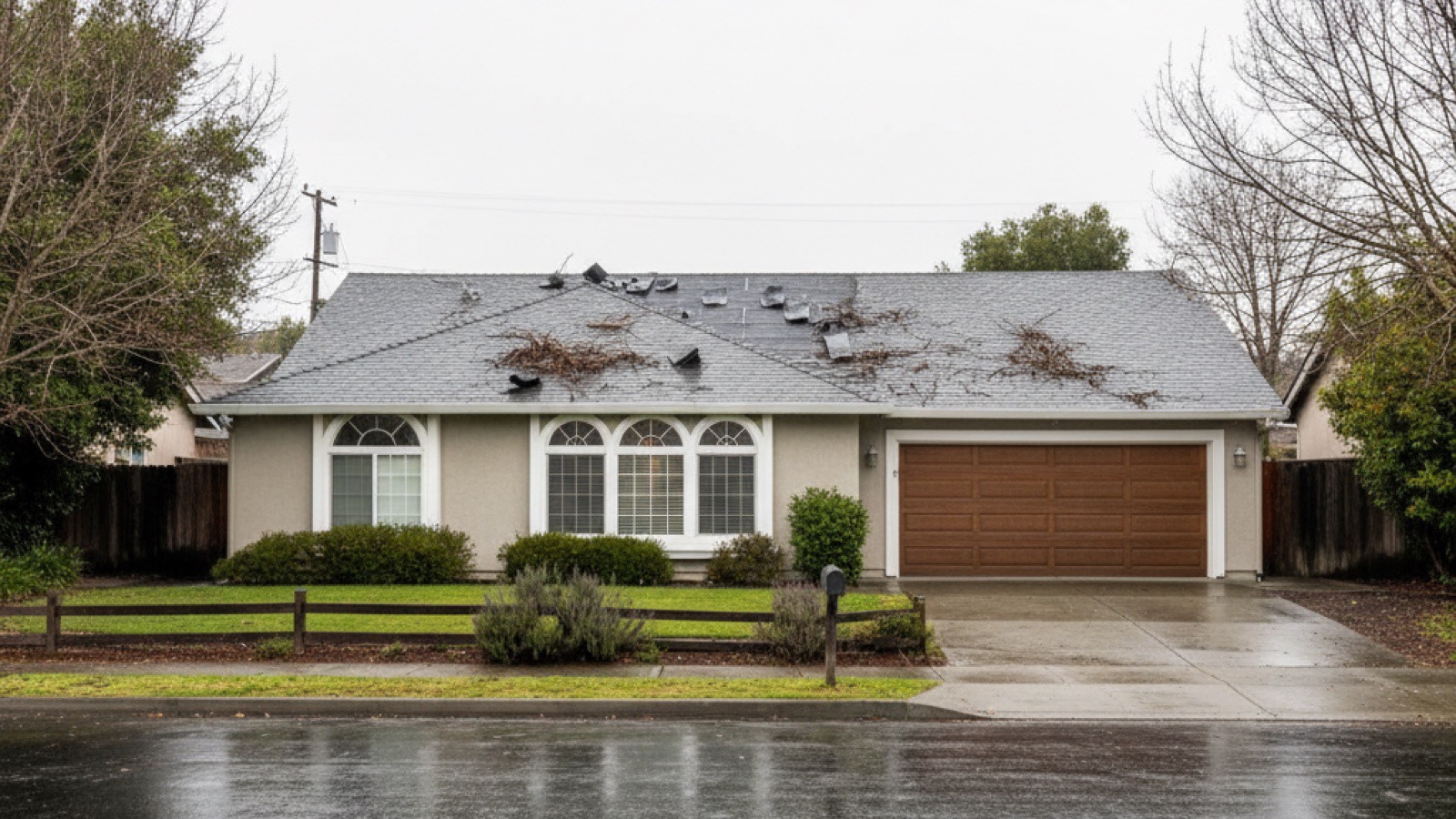
If a winter storm just hit your home, start with safety and documentation: stay off the roof, photograph any visible damage from the ground, and schedule a professional inspection before water has time to spread. Most storm damage roof repair in the Bay Area comes down to wind-lifted shingles, debris strikes from falling branches, and water intrusion from wind-driven rain, and the fix is far cheaper when it happens in days rather than weeks. This guide walks San Jose, Santa Clara, and greater Silicon Valley homeowners through exactly what to do after a storm, what repairs typically cost, and how to tell a quick repair from a sign your roof is near the end of its life.
Key Takeaways
- The Bay Area’s storm season runs roughly October through March, and wind plus wind-driven rain, not hail, cause most local roof damage.
- After a storm, document the damage, get a temporary tarp on any open area, and book an inspection before small leaks turn into decking and drywall damage.
- Minor storm repairs often run a few hundred to a few thousand dollars, while a free professional inspection tells you whether repair or full replacement is the smarter spend.
- California homeowners insurance usually covers sudden wind and storm damage but almost never age-related wear, so timing and documentation matter.
What Counts as Storm Damage to a Bay Area Roof?
Storm damage is any sudden harm caused by a weather event rather than slow wear. In the Bay Area, that mostly means wind and water. The National Weather Service’s San Francisco Bay Area office tracks a winter storm season that typically runs from October through March, when atmospheric river systems push strong winds and heavy rain across Santa Clara County and the Peninsula.
The most common forms of storm damage we see on local roofs are:
- Wind-lifted or missing shingles. Gusts peel back shingle tabs and break the adhesive seal, which exposes the underlayment.
- Debris impact. Falling branches and flying yard debris crack tiles, dent metal, and puncture membranes.
- Wind-driven rain intrusion. Water gets forced under flashing, around skylights, and into valleys that would stay dry in normal rainfall.
- Clogged or torn gutters. Overflowing water backs up under the roof edge and rots the fascia.
Because the Bay Area rarely sees hail, homeowners here sometimes assume their roof is safe. In reality, a single night of 40 to 60 mph gusts can do as much harm as a hailstorm elsewhere. A quick look at your gutters and downspouts after a storm often reveals the first clue, since granules and shingle fragments collect there.
What Should You Do Right After Storm Damage?
The hours right after a storm matter most. Acting quickly limits water damage and strengthens any insurance claim you file later. Here is the order we recommend to homeowners in San Jose and across the Peninsula:
- Stay on the ground. Wet roofs are dangerous, and climbing up can turn a minor claim into an injury. Inspect from the yard with your phone camera zoomed in.
- Document everything. Photograph missing shingles, debris, interior ceiling stains, and any water in the attic. Date-stamped photos help your adjuster.
- Contain active leaks inside. Move furniture, put down buckets, and pull back rugs so water does not spread into flooring.
- Get an emergency tarp installed. A professional tarp stops further intrusion until a permanent repair is scheduled. First Tier Exterior offers emergency roofing and tarping for exactly this situation.
- Schedule a professional inspection. A roofer documents the full scope, which you need before filing a claim or approving any work.
Why speed matters: A pinhole leak can saturate decking, insulation, and drywall within a single rainy week. The repair that would have cost a few hundred dollars becomes a structural and mold problem costing thousands.
How Much Does Storm Damage Roof Repair Cost in the Bay Area?
Costs depend on what failed and how far water traveled. Simple fixes handled before water spreads are modest, while repairs that involve soaked decking or interior damage climb quickly. The table below reflects typical 2026 pricing for Santa Clara County homes.
| Repair Type | Typical Bay Area Cost (2026) |
|---|---|
| Emergency tarping | $300 – $900 |
| Replace a small section of shingles | $500 – $1,800 |
| Roof leak repair (flashing, valley, or skylight) | $600 – $2,500 |
| Decking replacement after water intrusion | $1,500 – $4,500 |
| Partial re-roof of a damaged slope | $3,000 – $9,000 |
A professional roof leak repair that addresses flashing or a failed valley is usually the most cost-effective fix when the rest of the roof is sound. The only way to get an accurate number is an in-person inspection. First Tier Exterior provides free, drone-assisted roof inspections, so you can see the real condition of your roof before spending a dollar, and we offer financing through HomeRun Financing and Enhancify when a larger repair is needed.
What Are the Signs of Roof Storm Damage You Can Spot From the Ground?
You do not need to climb up to catch most storm damage. These are the warning signs worth checking after any Bay Area windstorm:
- Shingle pieces or granules in the yard or gutters. A clear sign the surface layer is failing.
- Dark patches or missing tabs on the roof. Visible from the street with a zoomed photo.
- Bent, loose, or hanging gutters and flashing. Wind pulls metal away from the structure.
- Water stains on interior ceilings or walls. Often the first interior symptom of a breach.
- Daylight or damp insulation in the attic. Indicates the decking or underlayment is compromised.
Some of these overlap with the broader signs you need a new roof. If your roof is already 20 years or older and a storm exposes widespread granule loss or multiple leak points, repair may only buy a little time. A roofer can tell you honestly whether you are looking at a targeted repair or whether planning for replacement is the better long-term value. Homeowners in Palo Alto with older original roofs run into this trade-off often.
Does Homeowners Insurance Cover Storm Damage Roof Repair in California?
Most California homeowners policies cover sudden storm damage from wind and falling trees, but they almost never cover damage from age or deferred maintenance. The California Department of Insurance publishes a residential insurance guide that explains how coverage and claims work. A few points shape every claim:
- Sudden wind and storm damage is typically covered.
- Wear and tear on an aging roof is excluded.
- Documentation drives the outcome. Clear, dated photos and a professional inspection report carry the claim.
- Deadlines apply. Most policies require prompt reporting, so do not sit on visible damage.
First Tier Exterior works alongside homeowners through the insurance claim process, documenting damage the way an adjuster needs to see it. We stay with you each step of the way, from the first inspection photos to the final repair.
How Do You Prevent Storm Damage With Pre-Season Roof Maintenance?
The best storm repair is the one you never need. A short roof maintenance checklist before the rainy season sets in protects your home and keeps small issues from becoming emergencies. Ready.gov’s winter weather guidance recommends preparing your home before the season rather than during a storm. Ahead of the Bay Area’s October-to-March window, check these:
- Clear gutters and downspouts of leaves and debris so water drains away from the roof edge.
- Trim tree limbs that overhang the roof and could break off in high wind.
- Look for lifted, curled, or missing shingles and have them resealed or replaced.
- Check that flashing around chimneys, skylights, and vents is sealed and intact.
- Book a professional inspection if the roof is more than 15 years old or has not been checked in several years.
Commercial property owners in San Jose benefit from the same pre-season check on flat and low-slope roofs, where ponding water is the bigger seasonal risk. Our team handles both residential and commercial roofing maintenance across the region.
How to Choose a Storm Damage Roof Repair Contractor in the Bay Area
After a storm, out-of-town crews and storm chasers often appear in Bay Area neighborhoods. Choosing an established local contractor protects you from shoddy work and disappearing warranties. Before you hire anyone, the California Contractors State License Board recommends you verify the contractor’s license, since any roofing work over $500 in California legally requires a licensed contractor.
Here is how First Tier Exterior approaches every storm repair, following the same five-step process we use on every project:
- Consultation. We review your situation, your photos, and any interior damage you have spotted.
- Inspection. We document the full scope with drone and hands-on assessment, including decking and flashing.
- Proposal. You get an itemized, written scope with material and warranty details, built for insurance when a claim is involved.
- Scheduling. We set the repair, with emergency tarping first if your roof is open to the weather.
- Installation. Our own in-house crews complete the work. We never subcontract your roof to an unknown team.
First Tier Exterior is a GAF Master Elite Roofing Contractor and Diamond Certified company, veteran and family owned, serving Santa Clara and the greater Bay Area since 2022 under California license #1093320. When your roof needs professional roofing work, those credentials mean access to extended manufacturer warranties that standard contractors cannot offer.