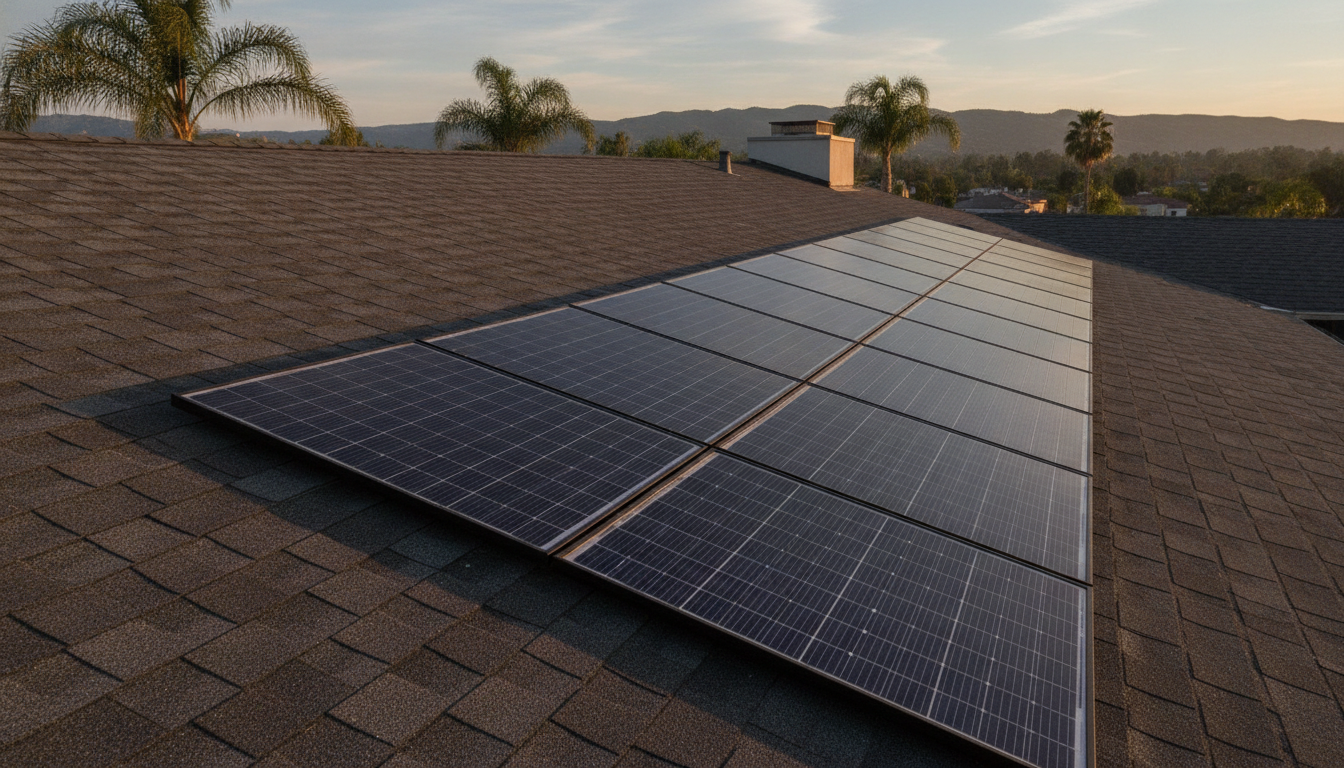

Solar Roofing in the Bay Area: GAF Timberline Solar vs. Traditional Panels
If you are a Bay Area homeowner considering solar, the biggest decision is not just whether to go solar. It is which solar system actually belongs on your roof. GAF Timberline Solar shingles and traditional rooftop solar panels are both strong options, but they perform differently, cost differently, and work better for different homes.
The short answer: if your roof needs replacement soon, GAF Timberline Solar is worth serious consideration because you get a new roof and solar in a single project. If your roof has years of life left, traditional panel systems are typically the faster and less expensive path to solar. This guide breaks down both options so you can decide with confidence.
What Is GAF Timberline Solar, and How Does It Differ from Traditional Panels?
GAF Timberline Solar shingles are a fully integrated roofing and solar system. Instead of mounting racks and panels on top of your existing shingles, the solar cells are built directly into the shingles themselves. The result is a roof that generates electricity without any raised panel profile.
Traditional solar panels, by contrast, are mounted above your existing roof surface using a racking system. They have been the standard approach for Bay Area homes for over two decades, and the installation ecosystem around them is mature, competitive, and well-understood.
Here is how the two systems compare across the factors that matter most to Silicon Valley and South Bay homeowners:
| Factor | GAF Timberline Solar | Traditional Panels |
|---|---|---|
| Aesthetics | Low-profile, shingle-integrated | Visible panels above roofline |
| Best for | Roof that needs replacement | Roof with 10+ years of life left |
| Installation | Roof + solar in one project | Solar only (roof stays) |
| Warranty | 25-year system warranty | Panel: 25 yr / Roof: separate |
| Energy output | Comparable per sq ft | Slightly higher efficiency per cell |
| Cost | Higher upfront (replaces roof) | Lower upfront if roof is sound |
How Much Do Solar Roofing Systems Cost in the Bay Area?
Cost is the question most Santa Clara and San Jose homeowners ask first. Here is an honest breakdown.
GAF Timberline Solar: A complete Timberline Solar installation for a typical Bay Area home runs between $35,000 and $70,000 before incentives. That range reflects both the solar component and the full roof replacement it includes. Because you are eliminating a future roof replacement cost, the true net figure is meaningfully lower for homeowners who were going to re-roof within the next 5 to 10 years regardless.
Traditional solar panels: A standard 7 to 10 kW rooftop panel system in the Bay Area typically costs between $18,000 and $30,000 before the federal tax credit. Post-credit (currently 30% through 2032 under the Inflation Reduction Act), real out-of-pocket costs run closer to $13,000 to $21,000 for most residential installations.
Both systems qualify for the same federal Investment Tax Credit (ITC). California also offers net energy metering (NEM 3.0), which allows you to sell excess solar power back to PG&E, reducing your payback period.
According to the Lawrence Berkeley National Laboratory’s “Tracking the Sun” report, California homeowners with solar consistently see the fastest payback periods in the country, averaging 5 to 8 years depending on system size, usage, and local utility rates. With PG&E rates among the highest in the nation, the Bay Area’s economics for solar are particularly strong.
What Are the Energy Output Differences Between the Two Systems?
Traditional solar panels convert roughly 20 to 23 percent of sunlight into electricity, depending on the panel brand and model. High-efficiency options from manufacturers like SunPower or LG reach the top of that range.
GAF Timberline Solar shingles use Timberline Solar Energy Shingles manufactured in partnership with Standard Industries and Nailite. Individual shingle efficiency runs somewhat lower than premium panel cells, but because a Timberline installation covers the full roof surface, the aggregate output is competitive for most Bay Area homes.
For a south-facing roof with good solar access in San Jose, Sunnyvale, or Santa Clara, either system can realistically offset 80 to 100 percent of a typical household’s electricity use. East or west-facing roofs produce somewhat less, and shading from mature trees or neighboring structures reduces output on both systems.
The key number to focus on is not efficiency percentage but kilowatt-hours (kWh) produced per year. A qualified solar contractor can model your specific address using PVWatts or similar tools before you commit to either system.
Which System Holds Up Better in Bay Area Weather?
The San Francisco Bay Area’s climate is mild compared to most of the country, but it brings its own roofing challenges: marine fog, temperature swings between coastal fog zones and inland heat pockets, occasional wind events, and the periodic heavy rain that can reveal vulnerabilities in aging roofs.
GAF Timberline Solar carries Class 3 impact resistance and is designed to meet the same building code requirements as standard GAF shingles. It is wind-rated to 130 mph, which exceeds what most Bay Area homes will ever see. Because the solar cells are integrated into the shingles rather than mounted above them, there are no rack penetrations or mounting hardware to leak over time.
Traditional panel systems on a well-maintained roof with professional installation are equally durable. The racking hardware and rail systems used by established solar contractors are engineered to handle decades of weather cycles. The main vulnerability is the roof itself: if the underlying shingles or tile develop leaks while panels are installed, accessing the roof deck for repair requires removing and reinstalling panels, adding cost and complexity.
GAF’s 25-year system warranty on Timberline Solar covers the shingles, the solar shingles, the labor, and the workmanship in a single document. Traditional installations typically have separate warranties for the roof and the panel system, which can create ambiguity if a leak occurs.
Is GAF Timberline Solar Right for Your Home?
The answer depends on three factors:
- Your roof’s current age and condition. If your roof is under 10 years old and in good shape, traditional panels are almost certainly more cost-effective. If it is 15 years or older, or already showing wear, a Timberline Solar project eliminates two future projects and bundles them into one.
- Your aesthetic preferences. Traditional panels are visible and identifiable, which many homeowners in San Jose and Palo Alto prefer (it signals green credentials clearly). Others, particularly homeowners in neighborhoods with strong architectural character, prefer the cleaner look of Timberline.
- Your timeline. Timberline Solar projects typically take longer to complete than a traditional panel installation because they involve a full re-roof. If you want solar producing quickly, panels on your existing roof get there faster.
First Tier Exterior is a GAF Master Elite Contractor and GAF Energy Solar Certified Contractor, two of the most selective contractor designations GAF offers. We install both Timberline Solar systems and work with homeowners on traditional solar-ready roof preparations. We do not push one system over the other. We look at your roof, your goals, and your budget, and tell you honestly which path makes the most sense.
What Does the Federal Tax Credit Cover for Solar Roofing?
The Inflation Reduction Act’s Investment Tax Credit covers 30 percent of qualifying solar installation costs through 2032. For Timberline Solar, the IRS has confirmed that the portion of the installation cost attributable to solar components qualifies. The standard roofing component does not qualify, but your contractor can provide a cost allocation that maximizes the eligible amount.
According to the U.S. Department of Energy, the ITC has helped drive an 85 percent reduction in residential solar costs since 2010. Taking full advantage of it requires that your tax liability be sufficient to absorb the credit in the year of installation. A tax professional can help you evaluate timing if you are close to the edge.
California also continues to offer the Self-Generation Incentive Program (SGIP) for battery storage paired with solar, which can add meaningful rebates if you are considering a battery backup system alongside your solar installation.
Frequently Asked Questions About Solar Roofing in the Bay Area
Does GAF Timberline Solar work on all roof types?
Timberline Solar is designed for standard asphalt shingle applications on sloped roofs. It is not suitable for flat roofs, tile roofs, or very low-slope applications. For Bay Area homes with existing tile or flat roofs, traditional panel systems are the appropriate solar path.
How long does a solar roofing installation take?
A traditional panel installation on an existing roof typically takes one to three days. A GAF Timberline Solar project, which includes a full re-roof, generally runs five to ten business days depending on the home’s size and complexity.
Can I add battery storage to either system?
Yes. Both GAF Timberline Solar and traditional panel systems are compatible with battery storage solutions like Tesla Powerwall and Enphase. Battery storage lets you use solar energy during the evening and during grid outages, which is increasingly important given PG&E’s history of PSPS (Public Safety Power Shutoff) events in the Bay Area.
What happens to the warranty if I sell my home?
GAF Timberline Solar’s system warranty is transferable to subsequent owners, which can be a meaningful selling point in Santa Clara County’s competitive real estate market. Most traditional panel manufacturer warranties are also transferable. The racking and inverter warranties vary by installer.
Do I need a permit for solar installation in San Jose or Santa Clara?
Yes. Solar installations require building permits in San Jose, Santa Clara, Sunnyvale, and every other Bay Area jurisdiction. As a licensed, certified contractor, First Tier Exterior handles the full permitting process, inspections, and PG&E interconnection paperwork on your behalf. —
Ready to Explore Solar Roofing for Your Bay Area Home?
Whether you are leaning toward GAF Timberline Solar or a traditional panel system, the right starting point is an honest assessment of your roof’s current condition and your energy goals. First Tier Exterior offers free inspections and zero-pressure consultations for homeowners across the Bay Area, including San Jose, Santa Clara, Sunnyvale, Palo Alto, Fremont, and surrounding communities.
As the Bay Area’s most certified exterior contractor and a GAF Energy Solar Certified installer, we can evaluate your roof and walk you through both options with real numbers.
Call us at (669) 249-1684 or request a free inspection online and we will get back to you within 24 hours.